Showing posts with label Bertrand Duchaufour. Show all posts

Friday, June 22, 2012

A Tale of Two Rhubarbs: Hermes Rose Ikebana and Aedes de Venustas Signature


Deliciously tart, ruby red stalked and leafy green, rhubarb grew like a weed in the bottom of our garden in late spring. When I was a child, my mother would give us rhubarb stalks freshly picked and trimmed with the ends dipped in sugar.

Rhubarb isn't a common note in perfume, but I ran across it three times this spring. The first was in La Tulipe by Byredo where it lent an impression of brilliant red and green to a perfume built around the idea of the spring flower.

Then this June, I was lucky enough to go on a vacation to Las Vegas. I love the hot, dry desert; it's so different than my usual wet, cold or humid Toronto. While in Vegas, I went perfume shopping - naturally. I found myself drawn to two perfumes with a distinct rhubarb note: Rose Ikebana by Hermes and the new Signature from Aedes de Venustas.

Rose Ikebana

"Beautiful and minimalist, the traditional Japanese art of ikebana - arranging bouquets of cut flowers and leaves using very few elements - ideally corresponded to a form of expression I could transpose in a perfume. The smell of a rose early in the morning, damp, sprinkled with dew, delicate and light." - Jean-Claude Ellena
I had to include that beautiful quote from the perfumer, Jean-Claude Ellena because it perfectly describes the perfume and, I think, his famously minimalist style. In Rose Ikebana, the rhubarb note is tart but sheer and a little like grapefruit. Although I originally went into the Hermes store planning to buy Pamplemousse Rose, I ended up with a bottle of the more subtle Rose Ikebana. After the rose and rhubarb, the dominant note is green tea. Dry and pretty, but not soapy or sweet, Rose Ikebana is the perfect antidote for the heat. Spray liberally however, for I find it doesn't last. [P.S. The Hermes in the Crystals shopping centre has the nicest store director! We chatted for a long time about perfume and Jean-Claude Ellena. He made me feel quite at ease in a store where I couldn't afford anything but the perfume.]

House: Hermes
Nose: Jean-Claude Ellena
Notes: rose, rhubarb, green tea

Aedes de Venustas Signature

When I saw the heavy amethyst bottle with its gold scroll top, I did a little jump for joy, right there in Barneys at the Venetian. The new Signature perfume from the niche perfume store Aedes de Venustas in New York is only available in their own shop or in Barneys and a few other places, but no retailers in Canada, so I was really excited to be able to try it. Not to mention that Signature was created by one of my favourite perfumes, Bertrand Duchaufour.

My first impression of Signature was "Huh. Weird." But after an hour with it on my hand I knew it was the most interesting thing I had smelled in while, and I went back for a bottle. It's very unique. It's also hard to describe because Signature has so many different facets. Mostly I smell damp earth with green growing things and a tension between bitter and tart. The tartness is the rhubarb, running like a green grapefruit note throughout the bitter earth. There's a dry woody hint of incense and something kind of funky in that dirt too, like compost in the garden, but I wasn't quite able to name what it reminded me of until I got home. I was walking in the hallway of my apartment building and smelled a familiar skunky sweetness and I had a light bulb moment! In an interview with Bertrand Duchaufour on Grain de Musc, he says he inserted a "ganja" accord into Signature. It's just a hint that pops up now and again in a very complicated but thoroughly enjoyable perfume. I've been wearing Aedes de Venustas Signature a lot this month and I am not even close to getting bored with it. I think it will be great all year 'round too.

House: Aedes de Venustas
Nose: Bertrand Duchaufour
Notes: rhubarb, hazlenut, green apple, ganja, vetiver, incense


Friday, July 8, 2011

Eau d'Italie - Jardin du Poete

Refreshing, Modern and Masculine

Eau d'Italie released its 8th perfume this spring Jardin du Poete. Like most of their other fragrances, Jardin du Poete was created by the seemingly tireless Betrand Duchaufour. Hurray! because I am a huge fan of Duchaufour. Eau d'Italie has been hit or miss with me, but of the perfumes that I have tried from the line, the ones I have liked, Baume du Doge, Paestum Rose and Magnolia Romana, were by Duchaufour.  I can add Jardin du Poete to that list.

Duchaufour is a master of what I think of as the "modernist" style of perfume. In "classical" perfumes, it's often not easy to pick out individual notes; you smell them as a whole, a complete picture, like a painting in which the brush stokes are hidden. Chanel No. 5 is what I would call a classical perfume. It doesn't really smell like jasmine and roses and ylang-ylang; it smells like Chanel No. 5; itself, a complete thing. Some perfumes may be chronologically modern, but still of this "classical" style, like Roja Dove's Diaghilev or The Party in Manhattan.

But a modernist perfume lays out it's notes like visible brush stokes or like a play, in which the characters enter the stage sequentially. A modernist perfume introduces us to a series of recognizable notes whose individual personalities can be appreciated even as they work together to create the whole story.

In Jardin du Poete, the opening notes of bitter orange and grapefruit are refreshing, clear and bright, like a stained glass window in shades of orange, yellow and pink. Then I smell the basil, green and peppery and a little grassy.  If summer freshness could have a smell, it would be basil.

Next I smell the angelica and musk, an herbal and comforting combination that seems to float above my skin. It's a sort of masculine vibe, that reminds me of Angeliques sous la pluie. but when I sniff closer to the skin the green grass is still there. Cypress and vetiver complete the poet's garden with dark green trees and earthiness.

Wearing Jarden du Poete is like sitting in a summer garden, eating fresh citrus and sipping Pimm's. It's more English countryside than Italy to me, but it's a beautiful and refreshing summer getaway in a bottle.


House: Eau d'Italie
Nose: Bertrand Duchaufour
Notes: Top: bitter orange, grapefruit, basil Middle: angelica, helicrysum (immortelle), pink pepper Base: cypress, vetiver, musk

Photo of the Palatine Hill, Rome: mine.

Tuesday, June 14, 2011

New Perfume Release: Penhaligon's Anthology Collection Esprit du Roi and Eau Sans Pareil


Penhaligons's is releasing the final two perfumes for its anthology collection: Esprit du Roi, by Bertrand Duchaufour and Eau Sans Pareil by Beverley Bayne.

From the press release:

Eau Sans Pareil
Originally created in 1988, Eau Sans Pareil has been transformed into a shimmering chypre.
Opening with a giddy rush of sparkling fruits and sensual white flowers, Eau Sans Pareil is
softened with sweet woods, elegant oakmoss and musks. Powdery, wistful and romantic.

Head: Aldehydes, Neroli, Mandarin, Bergamot, Kumquat, Raspberry, Pineapple, Cypress, Pink
Pepper, Tagetes
Heart: Jasmine, Damascus Rose, Muguet, Orris, Ylang, Orange Blossom, Liquorice, Clove
Base: Patchouli, Vetiver, Cedarwood, Oakmoss, Musk, Vanilla, Cistus-Labdanum, Benzoin, Amber Crystals

Esprit du Roi
Originally created in 1983, Esprit du Roi returns as a lush woody citrus, heady with swirling
scented foliage. Fresh tomato leaf, mint and raspberry leaf are combined with rich florals, warm
woods and potent musks to create this masterpiece of contrasts.

Head: Citrus Accord, Bergamot, Mandarin, Cedrat, Mint, Tomato Leaf, Davana Essence,
Aldehydes, Cardamom Absolute
Heart: Clove, Egyptian Geranium, Madagascan Ylang Ylang, Jasmine, Honeysuckle
Base: Vetiver, Cedar, Sandalwood, Patchouli, Raspberry Absolute, White Musk, Ambergris,
Oakmoss, Africa Stone.

I'm very fond of a few of the Penhaligon's perfumes, including Orange Blossom from the Anthology Collection, Elixer and Amaranthine. Both these new ones sound interesting. I'm not sure about raspberry and pineapple, but the rest of the notes in Eau Sans Pareil have me drooling.

Both fragrances launch in the UK and Europe on Monday 11th July in Penhaligon’s boutiques, selected department stores and online at www.penhaligons.com. They are priced at £98. No word on when they will be available in Canada or the U.S yet.

Anything by Betrand Duchaufour peaks my interest, and Esprit du Roi sounds like a complicated masculine feminine crossover. The Mint and Geranium like Geranium pour Mousieur, but with more florals. It also seems to have a chypre base but with raspberry, an odd note for a base note. I'm looking forward to trying them both.

Penhaligon's is an English company with a long history. It's first perfume, Hammam Bouquet was released in 1872. The Anthology Collection was started in 2009 and showcases some of Penhaligon's older perfume formulas, dating back to the 19th century as well as some from the 1970's and new perfumes.

Friday, December 24, 2010

We Three Kings: Eau d'Italie - Paestum Rose

A rose among the ruins
Myrrh is mine: Its bitter perfume
Breaths a life of gathering gloom.
Sorrowing, sighing, bleeding dying,
Sealed in the stone-cold tomb.
This is my final post in the We Three Kings series. Many thanks, first to Joanne at Redolent of Spices for starting this project with me and also to all the other amazing bloggers who joined us. Their posts have all been awesome and I'm so happy to have made so many new perfume-fanatic friends. Check them all out from the links at the bottom of this post.

Myrrh

After gold and frankincense, the Magi gave myrrh to the baby Jesus. Like frankincense, myrrh is another resinous incense, collected as tears from the damaged bark of trees.

Myrrh was the gift that symbolized death.  Way to ruin the festive mood there, Magi. Myrrh was an essential ingredient in ancient Egyptian funeral rites and was also commonly used in ancient times as a medicine to treat wounds and pain. Jesus was offered a cup of wine with myrrh in it before he was nailed to the cross. The taste of this medicine was apparently not so good - the word myrrh derives from the Aramaic word for "bitter."

What does it smell like?

Myrrh is a difficult note for me, I find it sometimes hard to isolate in perfumes, but, despite the origins of its name, I don't think it's a bitter smell. Myrrh to me is lightly sweet and woody, as you would expect a tree sap to be, It's not the intense, nose-tickling warmth of frankincense. Instead I think of myrrh as being a "cool" incense, if that makes any sense. Like smooth grey stones.

Myrrh works well in Paestum Rose, which is a perfume created to reflect the beauty of Paestum, Italy, a city famous for its ancient Greek temple ruins and its roses. Myrrh combines with a sheer rose to create a perfume that's light and cool on floral on top but also resinous and woody and comforting underneath. The rose is pale pink in my mind, and with a lightness like peony. A pink pepper spices it up and bridges the gap between the rose and the wood. The far drydown has something more piquant, maybe some black-currant, making it end sweeter than it began.

Paestum Rose is the smell of melancholy but also happy memories. Maybe I'll save Paestum Rose for the day after Christmas, a day for cleaning up wrapping paper and relaxing with a new book.

Merry Christmas everyone, and a fragrant New Year!

House: Eau d'Italie
Nose: Bertrand Duchaufour
Notes: davana, pink and black pepper, coriander, osmanthus,Turkish, incense, myrrh, opopanax, papyrus, Wenge wood

Please visit all these other blogs during We Three Kings week:

Three Kings Icon ©2010 Megan Ruisch 

Saturday, August 21, 2010

Penhaligon's - Gardenia

Light, breezy and pretty

Originally released in 1976, Gardenia was reformulated in 2009 by Bertrand Duchaufour as part of the Anthology Collection. As he did with Orange Blossom, M. Duchaufour created a sheer pretty interpretation of the flower.

In contrast to the number of notes listed below, Gardenia smells deceptively simple. It starts with a very green note, combined with jasmine and tuberose. There is a tartness that must be the rhubarb. In the heart I smell mainly the magnolia over some gentle, warm, woody spices.

Gardenia is fresh and easy to wear. It seems natural yet classic. I like Orange Blossom better, but I could see spritzing on Gardenia for a summer wedding or a garden party, that's the kind of feel it gives me.

House: Penhaligon's
Nose: Bertrand Duchaufour
Notes:
Head Notes
Violet, Rhubarb, Bergamot, Hyacinth, Magnolia, Green Leaves
Heart Notes
Gardenia, Rose, Ylang, Orange Blossom, Tuberose, Jasmine, Clove, Cinnamon, Lily of the Valley
Base Notes
Benzoin, Sandalwood, Musk, Vanilla

Wednesday, July 14, 2010

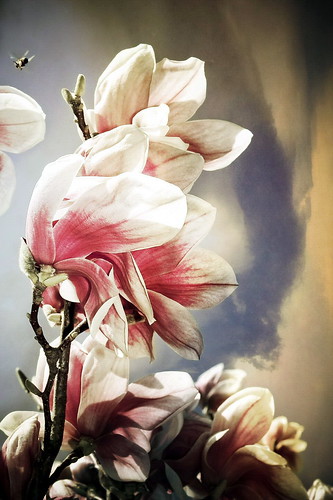
Eau d'Italie - Magnolia Romana

Walk beneath the magnolia trees outside the Villa Borghese in Rome

The original Eau d'Italie perfume was created for the Hotel Le Sirenuse in Italy. Subsequent Eau d'Italie fragrances explore the idea of travelling through Italy, the essence of the country, its beautiful locations, art and history.

Magnolia Romana was  inspired by the magnolia-lined avenues outside the Villa Borghese in Rome. The Villa was built by Scipione Borghese in the 17th century as his party palace, a place to get away from the city and enjoy his lush gardens and to house his impressive art collection.

Magnolia Romana starts with a blast of peppery green basil. For me, this note doesn't last long enough. I love the smell of basil, it evokes summer and great, fresh meals eaten outside. It's the perfect note to evoke Italy. Very lightly, there is the green cypress, like a distant breeze through a pine tree.

The middle notes are magnolia and fresh "water notes." I could have used less of the watery notes, but it does make this perfume very summery. I can imagine sitting beside a fountain in Rome, underneath a magnolia tree in bloom.

In the end it's a lovely musky wood. All in all, Magnolia Romana is a nice, sheer, pale pink and refreshing fragrance.

House: Eau d'Italie
Nose: Bertrand Duchaufour
Notes:
Top: purple basil, lemon leaves, cypress
Middle: magnolia flower, lotus, waternotes
Base: cedar, hay, white musk

Photo: bass_nroll

Wednesday, July 7, 2010

Penhaligon's - Orange Blossom

A light, sweet and refreshing orange veil for a hot summer day

Originally created in 1976 for their Anthology line, Penhaligon's classic Orange Blossom has been updated by the famous perfumer Betrand Duchaufour. You can watch a video of M. Duchaufour describing  Orange Blossom on the Penhaligon's site.

In the video, Duchaufour talks about how he wanted to modernize the perfume by giving is a more "contrastic" structure and richer notes. I don't know what the original was like, but this orange blossom feels quite sheer.

The top notes have a sharp lemony citrus.  Duchaufour speaks of adding a "leafy green" top note, and I do smell a little green here and it's also a little spicy.

In the heart Duchaufour added jasmine to the main orange blossom note, as well as other florals, but I think it's mainly the orange blossom and jasmine that I smell. He mentions adding a couple of florals that aren't in the official list, such as honeysuckle, narcissus and gardenia. I get a little of the narcissus, which has a feeling of pollen and once in a while, if I sniff deeply, I catch a hint of a rich gardenia.

To the base, he added "woody" notes and vanilla to make it more sensuous and comforting. What I mainly smell in the drydown is light, sweet wood and a slightly orangey vanilla. It is comforting.

On the whole, Orange Blossom is a light, refreshing, slightly sweet white floral with the barest hint of orange. It rests over my skin like a veil and is perfect in the muggy Toronto summer heat. Just a dab from the sample was not enough - I really have to pour it on to get the full effect - but it lasts all day and wafts up gently from my wrists as I write this. I might buy a full bottle and spray myself from head to toe this summer.

Perfume: Orange Blossom
House: Penhaligon's
Nose: Bertrand Duchaufour
Notes:
Head Notes
: Neroli, Violet leaf, Bergamot, Lemon-cedrat, Cardamom absolute, Pink berries
Heart Notes: Orange absolute, Egyptian jasmine absolute, Tuberose absolute, Rose essence, Peach flower, Orchid
Base Notes: Sandalwood, Virginian cedar, White musk, Vanilla


Art: Mockingbirds on Orange Blossom by Albert Earl Gilbert

Saturday, July 3, 2010

L'Artisan Parfumeur - Nuit de Tubereuse

Jungle love on a hot and humid night in Paris.

Nuit de Tubereuse is a complex and narcotic scent. I find it very hard to describe, more than any of my other perfumes and I've been wearing it for days now.  So I have had to repeat imagery from other bloggers who seem to get this perfume better than I do. According to L'Artisan Parfumeur, NdT is supposed to be the smell of a summer night in Paris, but it's not a city at all to me, more of a jungle. (The blog Muse in Wooden Shoes mentioned "jungle" first, but it's so true and I can't get it out of my head.)

NdT begins with a sharp, sour note and an edge of decay. I don't like it for the first minute. That brief unpleasantness morphs into sweetness. It's sort of the smell of mango and gentle spices. The smell of mango has an undercurrent of decay, something rotting on a jungle floor, along with a juicy tartness up top.

The tuberose, with it's bubblegum sweetness, comes out to join the mango a few minutes later and creates what Now Smell This described perfectly as the smell of Juicy Fruit gum. Just a little. But the indolic notes of tuberose and orange blossom and yland ylang are there too, making it tropical and sensuous.

This is the part I like best. As the tuberose and other indolic flowers take over, the perfume is warmed and grounded by sandalwood and musks. It becomes very, well the only word for it is humid. That fits right in with the notion of a jungle at night, but I suppose it also suits Paris in the summer - a city that locals flee during the hot, sticky months. And a city, I have been told, with a distinct lack of air conditioning. In tribute, I chose an image from "An American in Paris," the scene where the lovers meet for a late night walk along the river - a place to escape the humidity of the city. Also a place, I imagine, that would have had some of the damp smell of decay that I get from the beginning of the scent.

NdT becomes a sweet, fruity, spicy, woody, musky skin scent. The smell of a languid, humid summer night with a lover. The mango keeps it lighter than most tuberose perfumes, giving it the feeling of being composed of layers of light, transparent silks. It lasts for a long time, I even smelled a lingering sweet woodiness a day later, after a shower and a swim. I imagine it in colours of peach, orange and brown.

House: L'Artisan Parfumeur
Nose: Bertrand Duchaufour
Notes: cardamom, clove absolute, pink berries, pepper, citrus fruits, tuberose, orange blossom, ylang-ylang, rose, mango, tuberose root, angelica, gorse, sandalwood, pallissander, musk, benzoin, styrax


Picture, An American in Paris

Sunday, June 27, 2010

Penhaligon's - Amaranthine


Perfume: Amaranthine
House: Penhaligon's
Nose: Bertrand Duchaufour
Notes: Top: Green Tea, White Freesia, Banana Tree Leaf, Coriander Seed Oil, Cardamom Absolute; Middle: Rose, Carnation, Clove Oil, Orange Blossom, Ylang Ylang Oil, Egyptian Jasmine Absolute; Base: Musk, Vanilla, Sandalwood, Condensed Milk, Tonka Bean Absolute.

Lily and dirty Jasmine eat green bananas and condensed milk with silver spoons.

A little background on the name: the Greek amarantos was a mythical flower that never faded. The amaranth family of plants are often purple or gold and Penhaligon's offers Amaranthine in a deluxe bottle of purple glass but to me the colours of this perfume are green with white and creamy pale yellow.

Amaranthine is a sensual bouquet of rich milky tropical flowers with a hint of sweatiness complimented by green leaves and sandalwood.
Penhaligon's calls it a "corrupted" floral oriental. It does remind me of a tropical jungle: damp, ripe and sexual in both its rampant growth and decay.

Amaranthine starts with warm spices and green bananas. It sounds a little weird but actually smells wonderful. The middle is where the sexy, tropical flowers take centre stage. The major player in Amaranthine is ylang ylang, a yellow flower from a tropical tree that wikipedia says smell like custard and jasmine. Bertrand Duchaufour says that there is 5% ylang ylang in there. That's probably the note I think of as a lily, with it's feeling of thick fleshiness. Added to this are white florals like jasmine and orange blossom, with their indolic hints of sex, decay and intimate areas of the body. There's a feeling of close skin and warm nights created when you wear Amaranthine.

Beneath the green banana leaves and sexpot flowers are sweet creamy notes of vanilla and condensed milk. Some say this gives Amaranthine a "rice-pudding" feel but for me the sandalwood keeps it from being foody, and makes it just smooth and sexy and comforting. There is a metallic edge though, like eating green bananas and milk with a silver spoon while surrounded by thick, heady flowers.

Amaranthine is a favourite of mine and made me fall in love with Bertrand Duchaufour. I have several of his perfumes now and I'll probably continue to collect whatever he creates. Maybe next week I'll review one of his latest, Nuit de Tubereuse, which many say has a similar feel to Amaranthine, while being completely different.


Painting: Tamara de Lempicka, Printemps